LED vs Incandescent Christmas Lights: Which Is Better for Outdoor Displays?
For outdoor displays, we choose between LED and incandescent Christmas lights based on appearance, display size, run time, budget, and maintenance needs. LEDs usually use less electricity, stay cooler, and last longer. Incandescent lights work well for smaller seasonal displays that prioritize a classic warm glow and lower upfront cost.
Key Takeaways
- We often recommend LED lights for larger or long-running outdoor displays because they use less electricity, stay cooler, and require fewer replacements.
- Incandescent lights create a familiar warm appearance and may cost less upfront, but they use more electricity and often need more bulb replacements over time.
- We must use outdoor-rated LED and incandescent lights, follow manufacturer instructions, and inspect cords and bulbs for damage.
- Winter weather, roofline access, storage requirements, and annual setup time affect lighting plans for Greater Rochester properties.
- Permanent LED lighting can suit homes and businesses that want programmable colors, scheduled operation, and less annual installation and removal.
The Quick Answer: Which Outdoor Christmas Lights Fit Your Display?
For most outdoor displays, LED Christmas lights are the more practical choice because they generally use less electricity, run cooler, and typically last longer. Incandescent lights can still be a good fit for short seasonal displays where a familiar warm glow, traditional styling, and lower initial product cost matter most.
The LED vs. incandescent Christmas lights decision should reflect the size of the display, the appearance we want, how often the lights will run, the available budget, and how much seasonal maintenance we want to handle. Smart controls and year-round use also change the decision, especially for permanent systems.
LED is not automatically the right answer for every property. Many homeowners still prefer incandescent vs. LED lights based on nostalgia and the classic look of traditional bulbs. For properties across Rochester, Brighton, Fairport, Farmington, Greece, Hilton, Irondequoit, Victor, Canandaigua, and Honeoye Falls, the right choice starts with the display plan rather than the bulb type alone. Greater Buffalo property owners researching permanent outdoor lighting can use the same considerations.
| Factor | LED Lights | Incandescent Lights |
|---|---|---|
| Energy use | Generally use less electricity. | Generally use more electricity in comparable displays. |
| Upfront cost | May cost more initially, depending on product type and features. | Often have a lower initial product cost. |
| Bulb temperature | Run cooler. | Produce more heat. |
| Appearance and color | Available in warm white, cool white, colors, and many color-changing options. | Offer a classic warm glow. |
| Durability | Typically last longer, though performance varies by product and use. | May require more frequent replacement. |
| Replacement needs | Can be lower, depending on the product. | May be higher over time. |
| Smart control options | Often support programmable colors and controls. | Usually offer fewer programmable options. |
| Outdoor suitability | Must be specifically rated for outdoor use. | Must be specifically rated for outdoor use. |
| Maintenance | Requires cord inspection, installation, removal, storage, and occasional replacement. | Requires the same seasonal care, often with more bulb replacement. |
| Best-fit use case | Larger, longer-running, or programmable displays. | Smaller, short-term displays where traditional appearance leads. |
Actual electrical consumption depends on bulb count, bulb wattage, display size, daily run time, schedules, and control settings. Brightness, color quality, and durability also vary by product, so we recommend comparing the specific light strands or installed system under consideration.
Why LEDs Are Often Better for Larger Outdoor Displays
LED holiday lights work especially well on larger rooflines, trees, pathways, commercial façades, and displays with extensive bulb counts. Lower electrical use can make them easier to operate over longer seasonal schedules without making claims about a specific utility-bill result.
Cooler-running bulbs are also useful for displays that operate for extended periods. Proper installation still matters. We follow manufacturer instructions, use products intended for exterior applications, and plan each display around safe, protected connections.
LEDs typically last longer and may reduce bulb replacement needs. Still, product quality, handling, storage, and exposure to winter weather affect how any lighting product performs. A well-planned display uses consistent bulb styles, clean cord routing, and access points that make seasonal service simpler.
Appearance is one of LED’s strongest advantages. We can select warm white for a classic home, cool white for a crisp roofline, coordinated colors for a storefront, or color-changing effects for properties that want programming flexibility. Light color and bulb shape should match the desired design; not every LED produces the same look.
A coordinated roofline with consistent color temperature can help homes, storefronts, office buildings, hospitality properties, and managed properties look organized after dark. A storefront may use coordinated holiday colors, while an office building may run seasonal lighting on a set schedule. Hospitality properties can create a welcoming arrival experience, and managed properties can reduce the yearly effort of setting up a large temporary display.
DIY LED lights remain an excellent choice for simple layouts and homeowners who enjoy decorating each year. For larger designs or recurring commercial displays, professional planning can create a cleaner result with less seasonal work. Our Christmas light installation service helps keep temporary displays organized and property-appropriate.
Why Some People Still Choose Incandescent Christmas Lights
Incandescent lights still have a place in holiday decorating. Their warm, familiar glow appeals to people who value traditional styling, nostalgia, and a straightforward seasonal display. That look is not outdated or inferior; it simply serves a different preference than modern energy-efficient Christmas lighting.
Incandescent strands often cost less to purchase at the start. They can make practical sense for a smaller display that runs for a limited period, especially where the visual character of classic bulbs matters more than smart controls or long-term operation.
The tradeoffs are clear. Incandescent bulbs generally use more electricity than LEDs in comparable displays, produce more heat, and may need replacement more often. Seasonal maintenance can add up if the display includes many strands, roofline bulbs, or hard-to-reach areas.
Choose incandescent lights if we prioritize a classic warm appearance, have a smaller short-term display, and accept higher energy use and more frequent bulb replacement. The choice between incandescent and LED lights is not about declaring one option universally better. It is about choosing what fits the property, holiday style, budget, and willingness to maintain the display.
Outdoor Safety, Winter Weather, and Seasonal Ownership in Greater Rochester
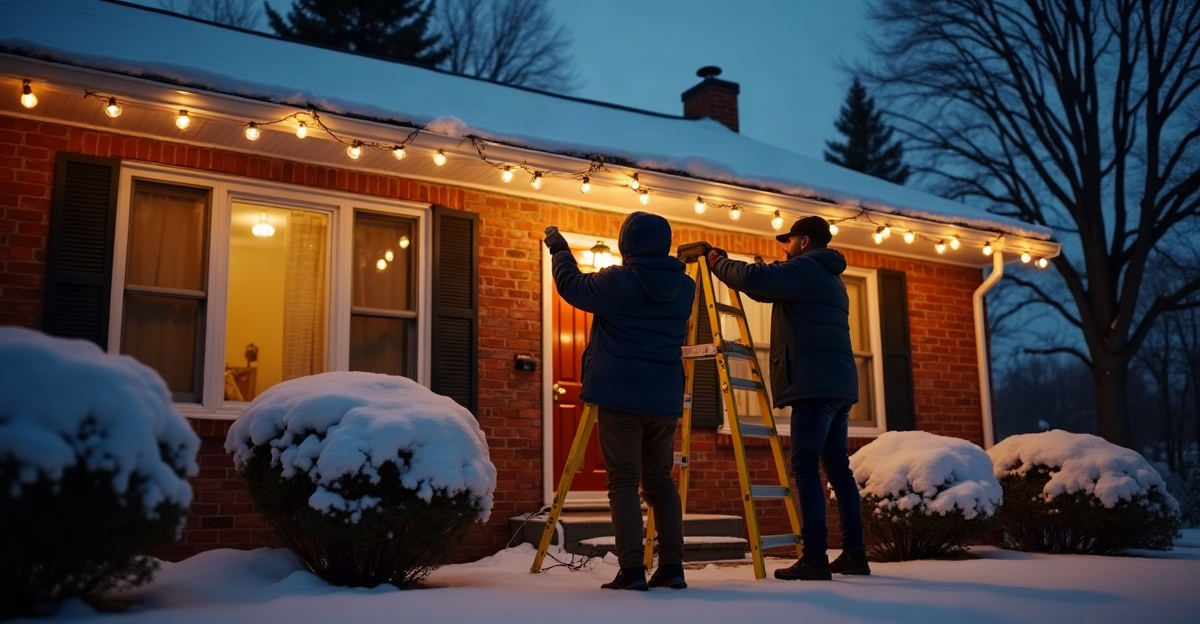
Greater Rochester winters add practical demands to every temporary lighting display. Cold temperatures, snow, wet conditions, roofline access, storage space, and annual installation all deserve attention before lights go up. Neither LED nor incandescent products should be expected to work flawlessly in every local condition. Performance depends on the product, installation quality, exposure, and manufacturer guidance.
Basic Outdoor Lighting Checklist
Before seasonal installation, we recommend a simple review:
- Use lights specifically rated for outdoor use.
- Inspect cords and bulbs before installation.
- Follow manufacturer instructions.
- Avoid damaged cords and damaged light strands.
- Use appropriate protected connections.
- Consider professional help for high rooflines or complex layouts.
Elevated rooflines, larger homes, commercial façades, and detailed layouts can make professional planning valuable. A planned installation supports cleaner roofline design, more reliable operation, and less ladder work during an already busy season.
Seasonal ownership also includes setup time, removal, storage, replacement bulbs, and keeping a consistent appearance from one year to the next. Choose temporary LED lights if we want lower energy use, cooler bulbs, more color or control options, or a display we can install ourselves each season.
When Permanent LED Outdoor Lighting May Make Sense
Temporary plug-in Christmas light strands and permanent outdoor lighting systems are related, but they are different products and decisions. Permanent LED outdoor lighting may suit homes and businesses that want a clean, programmable display without annual ladder work, storage, installation, and removal.
These systems can provide customizable colors, holiday and event presets, simple smart controls, scheduled operation, and a more consistent roofline appearance. Many properties also use permanent lighting for celebrations, events, or exterior accent lighting beyond Christmas. Explore our permanent holiday lighting options to see how a professionally installed system can fit a property.
Professionally installed systems can blend with a roofline when switched off, but the finished appearance depends on the roofline, trim color, mounting method, viewing angle, and installation details. Permanent lighting is not maintenance-free, invisible, or appropriate for every property. It requires thoughtful design, proper installation, occasional care, and realistic expectations about daytime visibility.
Consider permanent LED lighting if we want to avoid yearly installation and storage, value programmable lighting, want a polished roofline look, or plan to use exterior lighting beyond Christmas. Homes, storefronts, offices, hospitality properties, and managed properties can all benefit where visual consistency, programmable schedules, curb appeal, and reduced seasonal setup matter.
Cost is an important part of the decision. Our guide to permanent outdoor lighting costs explains the factors that can affect a project estimate.
Frequently Asked Questions About LED and Incandescent Christmas Lights
Are LED Christmas lights brighter than incandescent lights?
Brightness varies by product, bulb style, and display design. Compare the specific lights under consideration.
Do LED Christmas lights save electricity?
LEDs generally use less electricity, but actual consumption depends on bulb count, wattage, run time, display size, schedules, and control settings.
Do incandescent Christmas lights look warmer than LEDs?
Many people prefer the familiar warm appearance of incandescent bulbs, though warm-white LED options are also available.
Are LED Christmas lights better for outdoor use?
Both options should be rated for outdoor use. LEDs are often practical for longer-running displays because of lower energy use, cooler operation, and typical durability.
Is permanent outdoor lighting worth it for a home?
It may make sense when programmable lighting, a polished roofline display, and avoiding annual installation and removal are priorities.
Can permanent LED lights be used for more than Christmas?
Many systems can support holidays, events, celebrations, and everyday exterior accent lighting, depending on the system and planned use.
Plan an Outdoor Lighting Display That Fits Your Property
Original project photos, before-and-after examples, and locally relevant display images can help clarify the finished look. We recommend descriptive captions and accurate alt text that reflects each image.
For a home or commercial property in Greater Rochester, or permanent lighting in Greater Buffalo, we can help explore a design that fits the property and planned use. Request an Estimate to start the conversation.