
Driveway Lighting Ideas: Improve Visibility and Curb Appeal After Dark
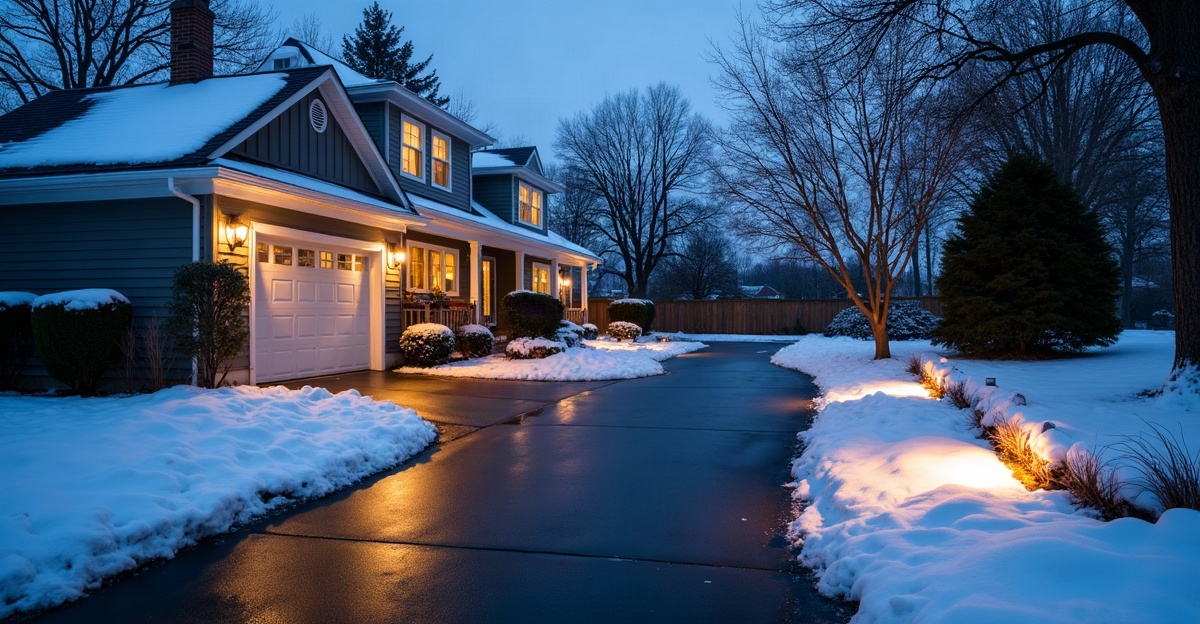
Driveway lighting improves after-dark visibility. We define key edges, curves, slopes, gates, garage aprons, and walkways without flooding the property with harsh light. A strong plan combines low-glare placement, weather-ready installation, and practical controls. These elements support safer travel and better curb appeal year-round.
Key Takeaways
- We light key transitions, bends, driveway edges, parking areas, and entry routes instead of every foot of the driveway.
- We use shielded, downward-facing fixtures to limit glare for drivers, guests, neighbors, and nearby windows.
- We match fixtures to each purpose. Path lights and bollards guide travel, downlights support parking areas, and motion-activated fixtures add focused visibility.
- We keep fixtures clear of plow routes. We also plan for snowbanks, wet pavement, landscape growth, and Rochester’s winter weather.
- We use timers, photocells, dimmers, or smart zones to control driveway, entry, landscape, and architectural lighting separately.
Plan Driveway Lighting Around Visibility, Navigation, and Curb Appeal
Driveway lighting ideas work best when they support the way a property is used after dark. We plan outdoor driveway lighting around the details that matter: finding edges, backing out, following curves and slopes, recognizing gates and house numbers, reaching the front entry, and using parking areas with greater confidence.
A good design separates the job of each light before selecting fixtures. Wayfinding and edge lighting help define boundaries, turns, and transitions. Entry and destination lighting supports garages, gates, walkways, parking areas, doors, and addresses. Driveway landscape lighting adds visual interest around stonework, trees, planting beds, and walls. Security-oriented lighting focuses visibility on selected areas, often through motion activation or directed fixtures. Permanent architectural lighting can provide understated nightly accent lighting, plus color options for holidays and events.
Lighting can improve nighttime visibility and make a property easier to navigate. It does not eliminate every safety risk, so thoughtful placement and realistic light levels remain important.
We consider driveway length and width, curves, slopes, turnarounds, garage locations, gate entrances, walkways, landscaping, existing structures, and preferred controls. For homes, this creates a connected arrival experience. For businesses, facilities, and commercial properties, it can support clearer parking-area navigation, storefront presentation, building identification, and entry visibility. Our residential outdoor lighting plans bring these areas together instead of treating the driveway as a separate project.
Driveway Lighting Ideas by Area of Your Property
Long or rural driveways usually do not need bright lighting along every foot. We focus on key edges, bends, gate entrances, bridge points, and transitions where drivers need visual guidance. Selected driveway lights create a clearer route while preserving the property’s natural nighttime character.
Curved drives benefit from low-level, shielded fixtures that show the direction of travel without placing a bright source in a driver’s view. Sloped driveways need added attention at changes in grade, edges, and arrival areas. Light aimed uphill or downhill can create glare, so fixture direction matters as much as fixture output.
At a driveway entrance or gate, lighting should make the access point and house number easier to recognize without shining outward toward passing traffic. Near garage aprons and parking areas, carefully directed downlights, wall-mounted fixtures, or architectural lighting can improve usable visibility for parking, unloading, and walking to the house.
Walkways from the drive to the door should coordinate with driveway fixtures. Matching light levels, finishes, and spacing creates an intentional look. Our front yard lighting ideas can help connect paths, entries, and landscape accents into one complete approach.
Commercial properties require the same coordination at a larger scale. Vehicle routes, pedestrian paths, storefront approaches, entry doors, parking areas, and building identification should work together visually. We can help property owners and facility managers evaluate commercial outdoor lighting for a more consistent after-dark presentation.
For project inspiration, our gallery may show useful examples of property-wide lighting approaches. An image description for this type of installation could read: “low-level driveway edge lights guiding a curved residential driveway in Rochester, NY.” See our lighting gallery for available project images.
Choose the Right Driveway Lights for Each Job
Fixture selection should follow the lighting purpose. Low-voltage path lights work well for defined pedestrian routes and selected driveway edges. Bollards provide stronger visual definition at turns, entries, and walkways. Well lights and in-ground fixtures can uplight nearby trees, stonework, walls, and architectural elements without adding visible poles along the drive.
Downlights mounted in trees or structures can direct light over parking spaces, walkways, and destination areas. Wall-mounted fixtures suit garages, gates, side entries, and parking areas. Step lights and retaining-wall lights help define elevation changes and hardscape transitions. Floodlights or motion-activated fixtures serve targeted, security-oriented visibility around specific locations.
Permanent integrated architectural lighting works differently. It can create subtle everyday roofline or façade accents, then shift to holiday colors or event displays as needed. Our guide to permanent outdoor lighting explains where this option can fit around a property.
| Lighting Need | Potential Approach | Placement Consideration |
|---|---|---|
| Driveway curve | Low-level edge or bollard lights | Position outside plow paths |
| Garage apron | Downlight or wall-mounted fixture | Aim away from driver sightlines |
| Decorative façade | Permanent architectural lighting | Use subtle everyday settings |
Permanent lighting is not automatically the right solution for every driveway. Conventional landscape fixtures often make more sense for low-level edge definition, while motion-activated fixtures can be the direct choice for focused security-oriented lighting. Permanent systems are a strong fit for properties that want year-round architectural accent lighting with less annual holiday setup. For roofline inspiration, review these roofline lighting ideas.
Use Placement and Brightness That Help Without Creating Glare
Light edges, changes in direction, transitions, and destination areas instead of aiming bright light directly at vehicles or people. This principle produces more useful driveway landscape lighting and a calmer appearance from the street.
Shielded, downward-directed fixtures help manage glare and keep light on the intended surface. Brighter is not always better. Overlighting can make it harder to see beyond the brightest area and may create uncomfortable glare for drivers, visitors, neighbors, and anyone looking toward the driveway.
There is no single lumen level that works for every property. Appropriate brightness depends on fixture type, spacing, surface reflectivity, surrounding darkness, snow cover, driveway width, nearby homes, and the intended effect. We evaluate these conditions before recommending fixture placement or output.
Rochester-area weather also shapes the plan. Snow, ice, wet pavement, freeze-thaw cycles, snowbanks, plow paths, landscaping growth, and shorter winter daylight all affect how lights perform visually. Fixtures should stay clear of likely plow routes and areas where snowbanks, parked vehicles, or growing plants may block or damage them. Wiring plans should also allow for future landscaping changes.
We direct light downward or toward its intended surface whenever practical. Fixtures should not shine into driver sightlines, bedroom windows, or adjacent properties. Reflective snow can make a modest lighting level appear much brighter in winter, which is another reason to avoid excessive output.
Add Controls for Everyday Use, Seasonal Lighting, and Events
Controls make driveway lights easier to use throughout the year, depending on the selected system. Timers provide predictable schedules, while photocells respond to changing daylight. Smart controls can allow supported systems to be adjusted from a phone or device. Our overview of smart outdoor lighting controls covers practical options for connected systems.
Zones allow separate control of the driveway, entry, landscape, and architectural lighting. Dimming supports softer everyday settings, while scheduled brighter settings can help during gatherings or when guests arrive. Where supported, color options can add seasonal interest to architectural features without changing the entire lighting setup.
A property may use subtle illumination at the driveway entrance every evening, increase visibility near the garage for visitors, and add color to the roofline for holidays. Conventional driveway lights may still be the more direct solution for path visibility and low-level edge definition. Seasonal conditions should remain part of the plan, including snow cover, plowing, plant growth, and early winter darkness.
DIY Driveway Lights vs. Professional Installation
DIY driveway lights can be practical for small, temporary, decorative, or straightforward low-voltage projects. Solar fixtures may also suit limited decorative applications, although performance can vary based on available sunlight, seasonal conditions, placement, and the illumination level needed.
Professional planning adds value for larger properties, electrical work, integrated controls, cohesive designs, complex curves and slopes, permanent installations, and fixture placement near plow paths or landscaping. At Holiday Lighting of Rochester, we assess the driveway layout, entry points, parking areas, existing structures, landscaping, desired effects, and control preferences before recommending a system. We also offer smart lighting automation for compatible projects.
Common Driveway Lighting Questions
Where should driveway lights be placed?
We place them along key edges, curves, transitions, parking areas, and destinations while keeping light out of driver sightlines and away from plow paths.
What type of lights work best along a driveway?
Low-level path lights and bollards can define selected edges. The right choice depends on layout, desired appearance, and seasonal conditions.
How can glare be reduced?
Shielded, downward-directed fixtures help prevent bright sources from shining toward drivers, windows, or neighboring properties.
Can permanent outdoor lighting serve more than holidays?
Yes. It can provide subtle architectural accents and color options for events and seasons, though it may not replace landscape or security fixtures everywhere. Review permanent outdoor lighting costs when comparing options.
How should lighting account for snow and plowing?
We keep fixtures outside likely plow paths and away from places where snowbanks or parked vehicles can block or damage them.
Holiday Lighting of Rochester serves Greater Rochester communities, including Brighton, Fairport, Farmington, Greece, Hilton, Irondequoit, Victor, Canandaigua, and Honeoye Falls. Permanent lighting availability may also extend to Greater Buffalo. Request an Estimate to explore a practical outdoor lighting plan for a driveway, entry, landscape, or commercial property.